

KNOW THIS RELATIVE
IDENTITY
Common Name: Ethiopian Heirloom Coffee
Scientific Name: Coffea arabica Family: Rubiaceae
Varieties: Kurume, Dega, Wolisho (regional heirlooms)
Type: Evergreen shrub / small tree
Origin: Southwestern highlands of Ethiopia — Kaffa, Sidama, Yirgacheffe regions
Distinctive Traits: Waxy green leaves, white star-shaped flowers, red coffee cherries
Note: The genetic birthplace of coffee — Ethiopia is home to the planet’s greatest coffee diversity, where wild and cultivated forms coexist.
ECOLOGY
Habitat: Montane rainforests and shaded agroforests
Climate: Mild tropical; 1,200–2,200 m elevation; cool mornings, misty afternoons
Soil: Rich volcanic loam with high organic matter
Light Preference: Dappled shade under canopy trees
Pollination: Insect-assisted, primarily bees
Ecological Role:
– Provides habitat and nectar for pollinators
– Prevents erosion on mountain slopes
– Serves as a keystone species in shaded agroforestry systems
ANATOMY
Root System: Deep taproot with lateral fibrous roots for nutrient uptake
Leaves: Opposite, glossy, elliptical with prominent veins
Flowers: Small, white, intensely fragrant, blooming after rains
Fruit: Oval berries (“cherries”) that turn red when ripe; two seeds per fruit (coffee beans)
Key Compounds: –Caffeine: Mental alertness and resilience
–Chlorogenic Acids: Antioxidant and flavor complexity
–Lipids & Sugars: Sweetness and body in the cup
HUMAN RELATIONSHIP
Cultural Origin: Indigenous to the Ethiopian highlands, where coffee was first discovered and ritually consumed.
Traditional Use: Roasted over open fire, ground by hand, brewed in clay jebena pots — the heart of the Ethiopian Coffee Ceremony.
Symbolism: Hospitality, spiritual connection, social gathering.
Global Influence: The origin of all Arabica coffee — every cultivated variety traces lineage to these wild forests.
Modern Significance: Revered for its floral aroma, bright acidity, and complex terroir-driven flavor — the genetic gold standard of coffee.
CHARACTER
Energetic Quality: Awakening yet grounding; stimulates focus and conversation.
Flavor Profile: Jasmine, citrus blossom, stone fruit, honeyed sweetness, tea-like clarity.
Aroma: Floral and ethereal, layered with subtle spice and cocoa undertones.
Growth Personality: Resilient, shade-loving, thriving in biodiversity and harmony.
Symbolic Essence: Connection between nature, ritual, and consciousness — the drink that awakens civilizations.
CONSERVATION
Status: Endangered in the wild due to deforestation and genetic erosion.
Ecological Value: Supports biodiversity in Ethiopia’s montane forests.
Threats: Climate change, agricultural expansion, and monoculture cultivation.
Sustainability: Shade-grown and hand-harvested heirloom varieties preserve both genetic diversity and ancestral practice.
Conservation Message: Protecting Ethiopia’s wild coffee forests is preserving the origin of human energy, culture, and connection.


STIMULANT WITH SOUL

DEEP ORIGINS


THE TASTE

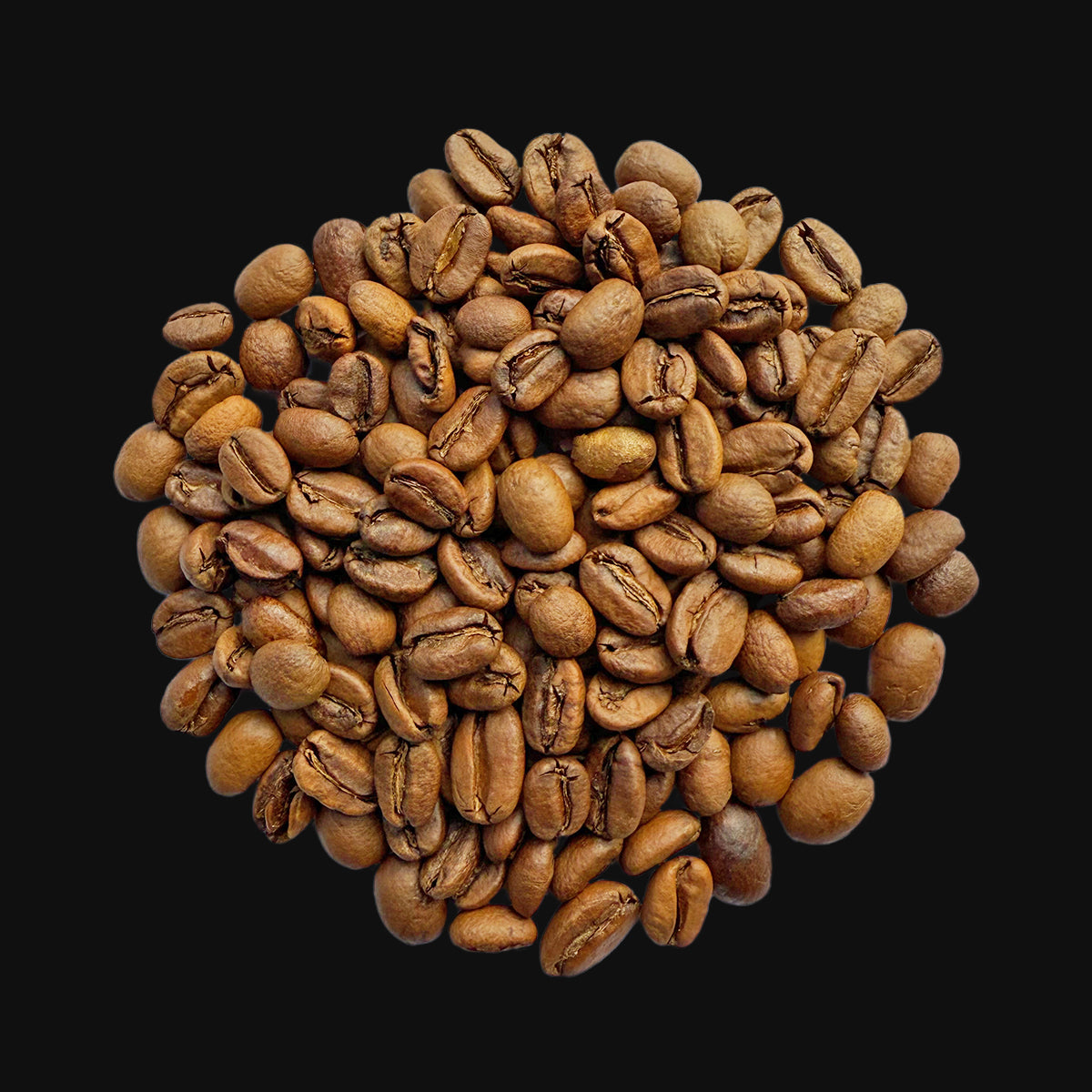
FUNCTIONAL ROAST
HOW TO PREPARE
-
1.
Measure 15 g of ground coffee per 240 g of water.
14 g for a lighter, brighter cup, or 16 g for more body and richness. -
2.
Heat fresh, filtered water to 195–205°F (90–96°C) — just below boiling.
This range extracts efficiently while preserving floral and fruit character. -
3.
Bloom by pouring about twice the coffee’s weight in water, saturating evenly.
Rest for 30 seconds to release CO₂ and improve extraction. -
4.
Pour slowly in gentle circles until you reach your total water volume.
Aim for a 3–4 minute total brew time for optimal extraction. -
5.
Enjoy mindfully — black for full expression of terroir, or with a touch of cream to soften acidity.
-
6.
💡 Pro Tip: Store beans whole and grind just before brewing to preserve the volatile oils and aromatics that define this coffee.


(Ratio ≈ 1 : 16)
| Feature |
The Wildest!
 Wild Based™ Heirloom Coffee
|
 Starbucks Single-Origin Ethiopia
|
 Folgers Dark Roast
|
|---|---|---|---|
| Single-Origin | ✓ | ✓ | ✕ |
| Nordic-Style (Light Roast) | ✓ | ✕ | ✕ |
| Small Batch | ✓ | ✕ | ✕ |
| Shade-Grown | ✓ | ✓ | ✕ |
| Market Context | 1–3% | 10–15% | 70–80% |


THE COFFEE PROCESS

001 SHADE-GROWN

002 HAND-HARVESTED

003 COMMUNITY PROCESSING

004 SUN-DRIED

005 DRY MILLING

006 NORDIC-STYLE ROAST
THE COFFEE PROCESS


001 SHADE-GROWN
In Ethiopia’s southern highlands — Yirgacheffe, Guji, and Gedeo — heirloom coffee grows in biodiverse forest gardens. No plantations. No synthetic inputs. Just volcanic soil, native trees, and traditional land stewardship.


002 HAND-HARVESTED
Farmers walk the trees every 8–10 days, picking only ripe cherries by hand. No machines. No mass harvesting. Only the best fruit at optimal ripeness are selected.


003 COMMUNITY PROCESSED
Cherries are sorted and weighed at local washing stations. Payment is based on ripeness, not bulk. These stations prioritize quality and community, not industrial scale.


004 SUN-DRIED
Cherries are dried in the sun on raised beds — either whole (natural), pulped (honey), or washed in clean spring water. Turned daily. Dried evenly. Zero shortcuts.


005 DRY MILLING
The dried coffee is mechanically cleaned, hulled, gravity-sorted, color-sorted, and finished with hand selection on conveyor belts. It’s packed for export in 60 kg bags with GrainPro liners for maximum freshness.

006 NORDIC-STYLE ROAST
We roast light in the Nordic style to let the bean’s wild character speak. Bright acidity, floral aromatics, fruit-forward complexity. Nothing masked. Everything revealed.